
When Sparkle Becomes Part of the Story
There is something enduring about the way diamonds catch light, even when they are not meant to steal the scene.
25/02/2026
A Familiar Shape With Quiet Power
There is something enduring about the way diamonds catch light, even when they are not meant to steal the scene. In the early days of planning a wedding, most conversations revolve around the engagement ring. Yet it is often diamond wedding bands that settle into daily life with the greatest intimacy. They are worn without much thought at first, then gradually become inseparable from the hand itself.
For many people, these bands represent a bridge between symbolism and practicality. They are decorative, yes, but they are also steady companions. The diamonds are there not to shout, but to remind.
How Diamonds Found Their Way Onto the Band
Diamonds were not always a feature of wedding bands. Historically, bands were plain and unadorned, valued for their shape rather than their surface. As cutting techniques improved and stones became more accessible, it became possible to add sparkle without compromising durability.
Over time, diamonds began to appear in small rows, flush settings, or delicate pavé work. The result was a ring that retained its circular simplicity while adding a layer of texture and light. This balance between restraint and detail is part of what gives diamond bands their lasting appeal.
A Style That Works With Everyday Life
One of the reasons diamond bands have endured is their versatility. They are comfortable enough to wear daily, yet refined enough to feel special. For someone who works with their hands, a low profile setting may feel practical. For others, a slightly raised design might feel more expressive.
There is also something reassuring about how these rings adapt to different contexts. They look just as natural with casual clothing as they do with formal wear. Over time, they begin to feel less like jewellery and more like a personal marker.
Worn Alone or Together
Some people choose to wear only a wedding band, either from the beginning or later in life. In these cases, the presence of diamonds can add dimension without overwhelming the simplicity of the ring. A single band can feel complete on its own, carrying enough visual interest to stand without an engagement ring beside it.
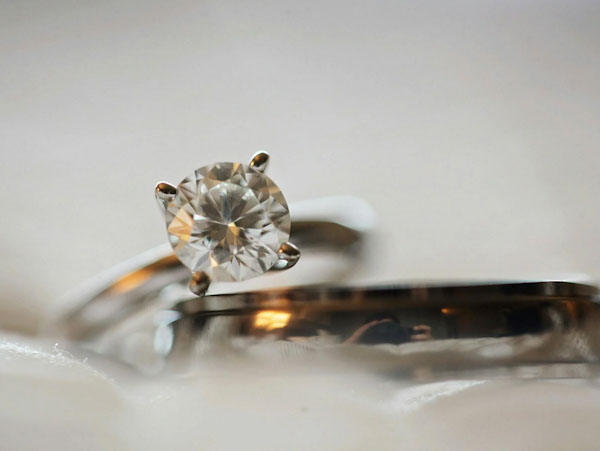
Others wear their band stacked against an engagement ring, noticing how the two pieces interact. Light moves differently when stones sit side by side. Small diamonds can echo the larger stone next to them, creating a sense of continuity.
There is no right way to wear them. Over time, preferences change, and the jewellery adjusts accordingly.
Subtle Design Choices That Matter
From a distance, many diamond bands look similar. Up close, the differences become clear. The size of the stones, the spacing between them, and the way they are set all influence how the ring feels on the hand.
Some bands feature diamonds set all the way around, creating a continuous circle of light. Others place stones across the top half only, leaving the underside smooth and unadorned. This choice often comes down to comfort and lifestyle rather than appearance alone.
The metal plays its part too. Different finishes reflect light in different ways, changing how the diamonds appear throughout the day.
The Emotional Layer Beneath the Surface
Jewellery often becomes meaningful not because of how it looks, but because of when it is worn. A diamond wedding band is present during everyday moments that rarely make it into photographs. Morning routines, quiet evenings, stressful days, ordinary celebrations.
Over time, the ring absorbs these moments. The diamonds catch light during conversations, gestures, and habits that define a relationship. In this way, the ring becomes a record of shared life rather than a symbol reserved for formal occasions.
The Marks of Time
No matter how carefully a ring is worn, time leaves its mark. Small scratches appear. Edges soften slightly. Diamonds may need occasional attention to ensure they remain secure.
Many people come to appreciate these changes. They signal that the ring has been lived in, not kept aside. The patina that develops over years can feel comforting, a visual reminder that the ring has been present through different chapters.
This aging process is part of what gives wedding bands their character. They evolve alongside the person wearing them.
Changing Traditions, Personal Choices
Modern approaches to marriage and jewellery are less prescriptive than they once were. Some couples choose matching bands. Others select completely different styles that suit individual tastes. Some add additional bands over time, while others remain loyal to the original ring.
Diamond bands fit easily into this flexibility. They can be layered, paired, or worn alone without feeling out of place. Their design allows for adaptation without losing meaning.
This openness reflects a broader shift toward personal expression rather than strict tradition.
Why They Continue to Matter
In a world where trends come and go quickly, diamond wedding bands maintain a steady presence. They do not rely on novelty or bold statements. Instead, they offer something quieter, a sense of continuity.
Their appeal lies in their ability to blend beauty with durability, symbolism with comfort. They are not worn to be noticed by others, but to be felt by the wearer.
That quiet consistency is what allows them to remain relevant across generations.
A Small Circle With Lasting Weight
At first glance, a wedding band may seem like a modest piece of jewellery. Over time, it reveals itself as something far more layered. It carries memory, habit, and intention within a simple form.
Diamond wedding bands, in particular, manage to hold both sparkle and subtlety. They do not demand attention, yet they reward it. They sit at the intersection of tradition and personal meaning, reflecting light while holding space for everything that happens around them.
In the end, their significance is not defined by how they look on the day they are exchanged, but by how they are worn in the years that follow.