
Renovating Your Kitchen or Bathroom? Here's Why HPL Should Be Your First Surface Choice
For most South African homeowners doing a renovation on a realistic budget, High Pressure Laminate — HPL — consistently delivers the best combination of durability, design choice, and value
20/08/2026
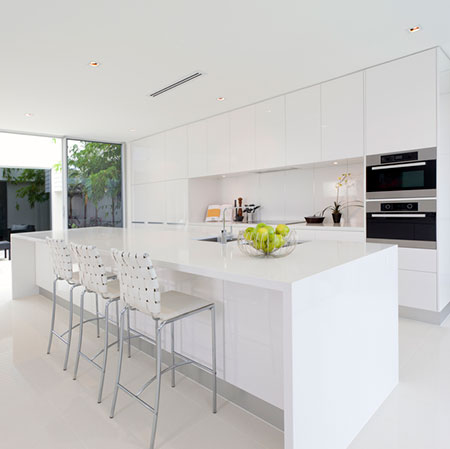
If you're planning a kitchen upgrade, bathroom refresh, or any kind of home renovation that involves new surfaces — worktops, cabinet doors, wall panels, or shelving — you've probably spent time comparing materials and feeling slightly overwhelmed by the options. Solid wood looks beautiful but needs maintenance. Natural stone is stunning but expensive and heavy. Melamine is affordable but chips and swells. So what's the sweet spot?
For most South African homeowners doing a renovation on a realistic budget, High Pressure Laminate — HPL — consistently delivers the best combination of durability, design choice, and value. And once you understand what it actually is and how it performs, it becomes a very easy decision.
What Is HPL, and How Is It Different From Ordinary Laminate?
This is where a lot of confusion starts. HPL is not the same as the thin melamine laminate you find on flat-pack furniture. Melamine is a decorative paper layer glued to a chipboard or MDF substrate under relatively low pressure — it looks fine when new but scratches easily, chips at edges, and swells badly when moisture gets in.
HPL is a fundamentally different product. It's made by stacking multiple layers of resin-soaked paper — including the decorative surface layer — and pressing them all together under very high heat and pressure (hence the name). The result is a dense, hard panel that's non-porous, scratch-resistant, impact-resistant, and moisture-resistant in a way that melamine simply isn't. Think of it less like "fancy sticker paper on a board" and more like a solid engineered sheet in its own right.
Why It Works So Well in Kitchens
The kitchen is the hardest-working room in any home, and the surfaces there need to handle heat, moisture, cooking residue, and daily impact without showing every mark. HPL handles all of this without fuss.
Worktops finished with HPL resist hot pots better than most surface-applied alternatives (though trivets are always a good idea), wipe clean without specialist products, and don't require annual sealing the way granite or timber worktops do. Cabinet doors in HPL hold their appearance through years of daily opening and closing — no swelling at the base from steam, no chipping at the corners from normal use.
The range of finishes available from manufacturers like Golden Ricky is extensive: woodgrain textures that genuinely look and feel like timber, concrete and stone effects, high-gloss colours, super-matte solids, and everything in between. Whether your kitchen style is contemporary minimalist, warm Scandi, or classic neutral, there's an HPL finish that fits — and it will keep looking that way years down the line.
Bathrooms and Wet Areas
Bathrooms are where cheaper surface materials really show their limitations. Moisture is constant, and materials that aren't genuinely water-resistant fail — swelling, delaminating, growing mould at joins. HPL's non-porous surface means water doesn't penetrate, which makes it an excellent choice for vanity tops, wall panels, and cabinet fronts in bathrooms and wet areas.
For shower enclosure walls or areas with direct water contact, compact laminate — the solid, substrate-free version of HPL that's used in commercial washroom partitions globally — is worth considering. It requires no substrate at all and can handle continuous moisture exposure without any degradation.
The DIY Angle: Is HPL Easy to Work With?
For South African homeowners who like to tackle their own projects, HPL sheet bonds well to MDF and plywood substrates using contact adhesive — the same process used by professional kitchen manufacturers. It can be cut with a fine-tooth saw blade (score and snap works for thinner sheets) and routed for edge profiles. Many local timber and board suppliers stock standard HPL sheets, and cut-to-size services are increasingly available.
If you're buying HPL for a specific project, the Golden Ricky High Pressure Laminate range gives a clear overview of the grades available — from standard decorative sheets through to specialist grades like postforming (for rounded worktop edges), antibacterial (for kitchen and food prep areas), and compact laminate for wet zones.
The Bottom Line
HPL is the surface material that professional kitchen and shopfitting manufacturers have relied on for decades — because it performs. For the homeowner renovating a kitchen, bathroom, or any high-use space in the home, it offers the durability of a commercial-grade material with the design range of a premium decorative product, at a cost that doesn't require a second mortgage.
If you haven't considered it before, it's worth a closer look before committing to anything else.