
The Difference in Quotes for Tarred Surface Driveways
Two neighbours on the same street can get quotes for the exact same size driveway that differ by thousands of rand, and it's rarely because one of them is being overcharged — it usually comes down to a handful of things happening under the surface that most homeowners never think to ask about.
29/07/2026
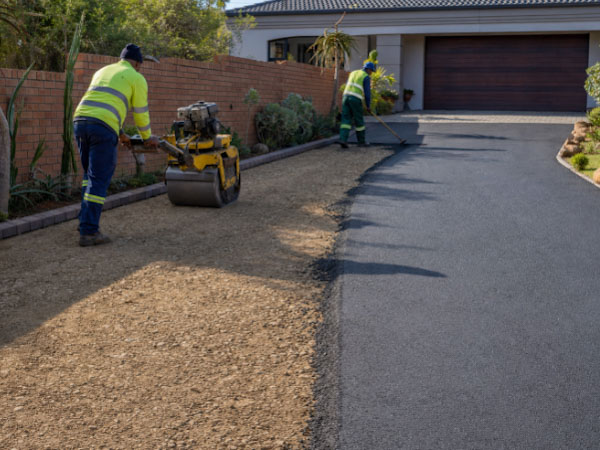
If you've started collecting quotes to
tar or resurface a driveway, you've probably
already noticed this. The numbers don't line up,
nobody explains why, and it's tempting to just
take the cheapest one and hope for the best.
Before you do that, it helps to know what's
actually driving the price, so you can tell a
fair quote from a shortcut.
- The size of the area. This sounds obvious, but it doesn't scale the way you'd expect. Small residential driveways often work out more expensive per square metre than a big commercial car park, simply because the contractor's setup and travel costs get spread over less surface. Indicative residential rates tend to sit in the roughly R70–R110 per square metre range for the surfacing layer alone, though every site is different, so treat any figure as a starting point to verify, never a fixed price.
- The condition of what's underneath. A driveway is only as good as its base, and this is where a lot of the price gap comes from. If the ground needs to be dug out, re-levelled or properly compacted before any tar goes down, that's real labour and machine time that a rushed quote might be leaving out. Checking your number against a South African guide to what shapes tar surfacing prices is a sensible way to see whether it's roughly in line with current ranges for your type of job before you sign anything.
- How easy the site is to get to. Awkward access, a steep slope, tight gates, or having to work around existing walls and paving all add hours that a straightforward job wouldn't need. If your property is tricky to reach, expect that reflected honestly in the number, and ask your contractor to spell out exactly what extra work that access requires.
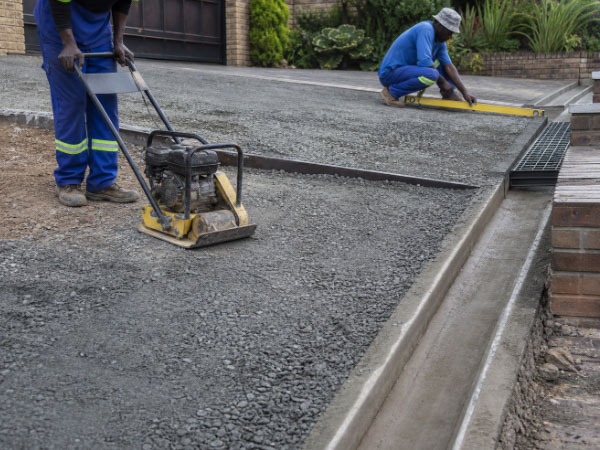
- Whether the old surface needs to be removed first. Ripping out old tar, broken paving or a failed concrete slab before starting fresh is its own job, with its own disposal costs. Some quotes bury this cost inside a vague line item, others separate it clearly — the second is always the one to trust.
- Drainage and the natural slope of your property. Water that doesn't run off properly is one of the fastest ways to wreck a new surface, so a contractor who takes drainage and gradient seriously may quote a little higher up front, but it usually protects you from cracking and pooling later.
- The quality and grade of the materials, and whether the contractor can prove it. This is where it's worth doing a bit of homework. Ask whether the mix and workmanship follow recognised South African guidance — the COTO manual for road design, SANS for material testing, and the TRH series for construction and compaction methods. A contractor who can produce batch certificates or compaction records isn't being difficult; they're showing you the paper trail behind their price. The South African Bureau of Standards and the South African National Roads Agency both publish background on these standards if you want to read further before you commit.
None of this means the cheapest quote is automatically wrong, or the priciest one is automatically right. It means the gap between quotes almost always has a reason, and that reason is usually sitting in one of the six things above. A well-built surface with sensible upkeep can reasonably be expected to last somewhere in the region of ten to twenty years. Ask each contractor to walk you through their number line by line, get more than one quote before you decide, and you'll be in a far better position to know exactly what you're paying for.