
Planning a New Boundary Wall: What to Decide Before You Get a Single Quote
A new boundary wall is one of the biggest exterior jobs a homeowner takes on but before you commit, a handful of early decisions quietly determine both the price you'll pay and how the finished wall makes your home feel.
29/07/2026
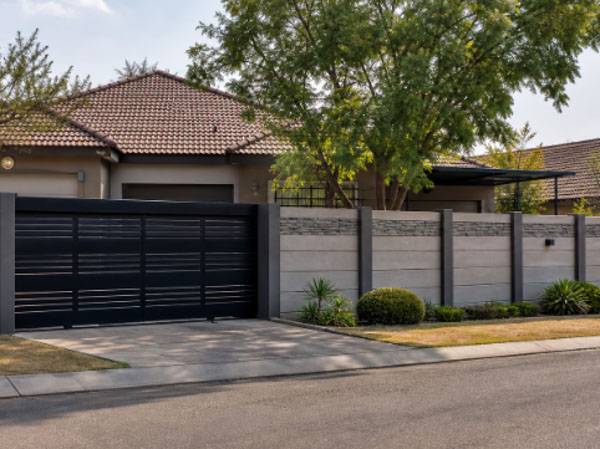
A new boundary wall is one of the biggest exterior jobs a homeowner takes on — and it's the one people most often rush, overpay for, or end up disliking the look of. Before you commit, a handful of early decisions quietly determine both the price you'll pay and how the finished wall makes your home feel.
The old fence has to come down, and you're already picturing the finished look. But a wall is permanent, costly, and on show from the street every single day, so it pays to settle the handful of decisions that set the price and the finish before anyone pours a foundation. Get these wrong, or leave them until the quoting stage, and you end up paying twice — once for the wall, and again to fix what you didn't plan for. Here are a few pointers from a precast-wall installation estimator we asked.
- Pin down the height first. A standard residential wall runs to about 1.8 m, while 2.4 m is the premium, security-driven height some homes need. Go taller and you need deeper footings and stronger posts, so height drives the per-metre cost more than almost anything else on the job. Decide on it before you ask anyone to price the work, so every quote you receive is comparing the same wall.
- Choose plain or decorative early. A plain panel is the budget baseline, while a decorative, textured or moulded finish typically adds around 10–20% to the price. Pick the look you actually want upfront rather than "seeing how it goes" — retrofitting a nicer finish once the wall is already standing costs far more than choosing it from the start, and rarely matches as cleanly.
- Check site access and ground conditions before anyone quotes. Rocky ground, a slope, tree roots, or a tight, machine-unfriendly site can all push excavation and handling costs up sharply. An estimator can only price accurately once they've seen how the site actually sits, so be upfront about access rather than letting them discover it on the day — surprises at that stage tend to land as extra costs, not favours.
- Plan the security and gate details upfront. Spikes, electric-fence brackets, a matching gate, palisade toppers — decide on these before installation, not after. Retrofitting brackets or working a new gate into an already-finished wall is fiddlier and dearer than building them in from day one, and the join rarely looks as neat.
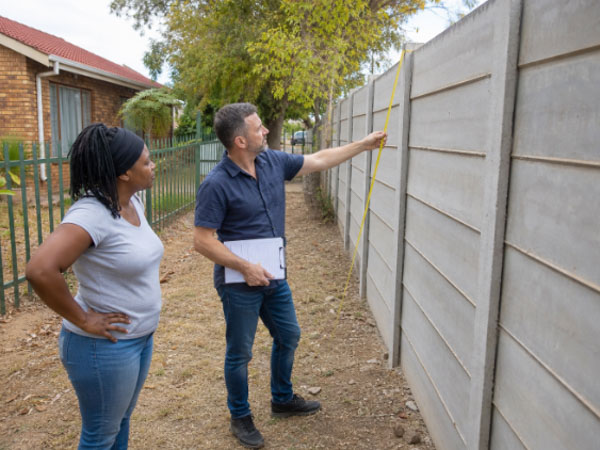
- Budget with a realistic per-metre figure. Installed precast commonly runs around R620–R1,400 per metre in South Africa, covering panels, posts, footings, labour and delivery, with height, finish and region moving you within that band — coastal areas often carry a salt-air-treatment premium worth asking about. Treat this as an indicative planning range rather than a fixed price, since ground conditions and access, as above, can shift it either way. It's also worth confirming your local municipality's current height and boundary by-laws before you finalise the design; this is commonly a requirement, and a quick check with your local building-control department can save a headache later.
- Get and compare more than one quote before you sign. Prices for the same wall, on the same site, can vary surprisingly widely between installers, so line a few up side by side rather than taking the first one you're offered. You can compare quotes from several local precast installers side by side, for free and with no obligation, before you choose who does the work.
A precast wall, well planned, can last 50+ years with basic maintenance, so an hour or two spent comparing heights, finishes and quotes now pays off for decades to come. The calm, well-compared decision is nearly always the cheaper one in the end.