
Why a Pool Heat Pump Is One of the Smartest Investments for Your Cape Town Home
A pool heat pump extends your swimming season by three to four months on either side of summer and for Cape Town homes where energy costs continue rising, the return on this investment is measurable and relatively quick.
22/05/2026
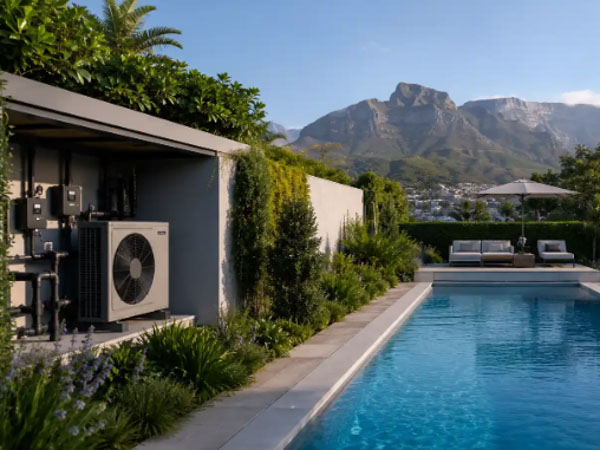
A swimming pool that sits unused for five months of the year is an expensive asset delivering poor returns. Cape Town homeowners with pools know this frustration well. The water drops too cold from April onwards, the family stops swimming, and the pool keeps consuming electricity and maintenance costs regardless.
A pool heat pump solves this directly. It extends your swimming season by three to four months on either side of summer. For Cape Town homes where energy costs continue rising, the return on this investment is measurable and relatively quick.
How a Pool Heat Pump Works
A pool heat pump does not generate heat directly. It extracts warmth from ambient air and transfers it to your pool water using a refrigerant cycle. Only electricity to run the compressor is required, not to produce the heat itself.
A pool heat pump produces five to seven units of heat for every one unit of electricity consumed. A conventional pool heater converts electricity to heat at a one-to-one ratio. Over a full season, that difference produces substantial savings on your monthly bill.
The system connects directly to your existing pool pump and filtration circuit. Water circulates through the unit, absorbs warmth, and returns at a consistently higher temperature. A thermostat maintains your target water temperature automatically.
The Cape Town Climate Advantage
Cape Town's climate makes pool heat pumps particularly effective. Ambient temperatures remain mild through autumn and spring, typically between 14°C and 22°C during shoulder months. Heat pumps extract useful warmth at these temperatures efficiently.
This means productive operation through March, April, September, and October. These are the months when unheated pools become too cold for comfortable swimming. A heat pump extends the comfortable swimming window from roughly four months to seven or eight.
The Atlantic Seaboard and Southern Suburbs experience Cape Town's coldest water temperatures due to upwelling. Homeowners in these areas find heat pumps especially worthwhile as a result.
Installation and Compatibility
Pool heat pumps suit the vast majority of existing Cape Town residential pools. The unit installs beside your pool equipment, connects to existing pipework, and requires a standard electrical connection. Most installations complete within a single day.
Sizing matters significantly. A unit too small for your pool volume will struggle to reach target temperatures and run continuously. An oversized unit costs more upfront without proportional benefit. Professional sizing considers pool volume, target temperature, and whether your pool has a cover.
Pool covers work in combination with heat pumps to reduce running costs considerably. A cover retaining heat overnight means the pump runs less frequently during the day. The combination of heat pump and cover is the most cost-effective approach to year-round pool enjoyment.
Energy Costs and Payback Period
Running a pool heat pump in Cape Town typically costs between R400 and R800 per month during shoulder season. A conventional electric resistance heater achieving the same result costs three to five times more to run.
Capital cost of a quality residential unit ranges from R15,000 to R35,000 installed. At current electricity prices, most Cape Town pool owners recover this investment within three to five years.
As Eskom tariffs increase annually, that payback period shortens further. The heat pump purchased today becomes progressively more valuable as grid electricity becomes more expensive.
Choosing a Reputable Supplier
Installation quality determines long-term performance as much as product quality does. Incorrect pipework sizing, inadequate electrical supply, or poor positioning will cause any unit to underperform regardless of its specifications.
For Cape Town homeowners, working with an established local specialist ensures sizing, installation, and after-sales support all meet the standard the investment deserves. The suppliers of SunScan swimming pool heat pumps in Cape Town serve the Western Cape residential market with SABS-tested systems, professional installation, and warranties of up to 10 years on selected products.
Always request a site assessment before purchasing. A qualified installer evaluates your pool volume, equipment layout, and electrical supply before recommending the correct unit. This prevents the most common and costly mistake in pool heating: buying the wrong system for your property.
Maintenance and Longevity
Pool heat pumps require minimal ongoing maintenance. Annual inspection of the refrigerant circuit, coil cleaning, and electrical connection checks are typically all that residential units need.
Titanium heat exchangers resist the corrosive effects of pool chemicals reliably over many years. The compressor carries the longest warranty period on quality units because manufacturers are confident in its durability.
Keep the area around the unit clear of debris and ensure adequate airflow to the evaporator coil. Both requirements are straightforward and add nothing meaningful to your maintenance workload.
Conclusion
A pool heat pump transforms a seasonal asset into a year-round feature of your home. For Cape Town homeowners who have already invested in a pool, it is one of the most sensible additions available.
Extended swimming season, genuine electricity savings, and a clear payback period make the decision straightforward for most properties. Choose the right unit, have it professionally installed, and your pool delivers considerably more value for considerably less than you might expect.