
Which Plumbing Jobs You Can Safely DIY — and Which Ones Will Cost You a Ceiling
Some jobs genuinely are a Saturday-morning fix while others will have you explaining a stained ceiling to your insurer but here's how to sort one from the other.
29/07/2026
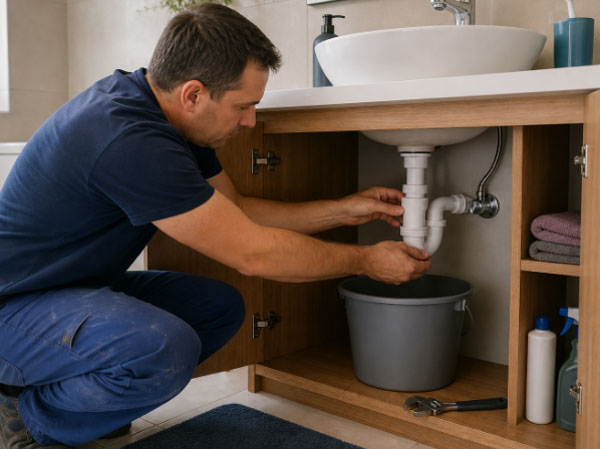
I once decided a Saturday morning was the perfect time to fix a "quick drip" under the bathroom basin. Five minutes, I told my wife. Forty minutes later I was on my knees in an inch of water, the cupboard under the sink had swollen shut, and I'd learned — the expensive way — that a hand-tight compression fitting is not the same thing as a "just give it one more turn for luck" fitting.
Nobody was hurt. The tiles survived. But it taught me something more useful than any YouTube video ever did: the real skill in home plumbing isn't knowing how to fix things. It's knowing which side of the line a job actually sits on before you pick up a spanner.
Some jobs genuinely are a Saturday-morning fix. Others will have you explaining a stained ceiling to your insurer. Here's how I sort one from the other now.
Jobs you can safely do yourself (with a bit of care)
These are low-pressure, isolatable, and forgiving of a beginner's mistakes — worst case, you mop up and try again.
- Replacing a tap washer or cartridge — it's isolated at the tap itself, the water pressure involved is minimal, and the worst outcome is a drip, not a flood.
- Swapping a shower head or tap aerator — no pipework gets opened, it screws on and off, and there's nothing behind it to go wrong.
- Clearing a slow basin or sink trap (the P-trap) — the fittings are hand-tight by design; keep a bucket underneath and you're covered.
- Unblocking a drain with a plunger or hand auger — it's purely mechanical, so there's no risk of the chemical-drain-cleaner-meets-old-pipes gamble.
- Replacing a toilet seat, or the fill or flush valve inside the cistern — the whole job is self-contained and isolatable at the toilet's own little shutoff tap.
- Re-siliconing around a bath or basin — it's cosmetic and there's zero pressure involved; the worst case is an untidy bead you can cut out and redo.
- Checking or bleeding an accessible isolation valve — this one isn't really a repair, it's a habit: knowing where your own shutoffs live.
One rule before you touch any of the above: find your isolation valves and your main shutoff, and test that they actually work, before you start. That single habit is what turns a mistake into an inconvenience instead of a flood.
Jobs to leave to a licensed plumber (and why)
These are the jobs where the stakes change — pressure, concealed damage, electricity, gas, or a compliance sign-off your insurer will one day ask to see.
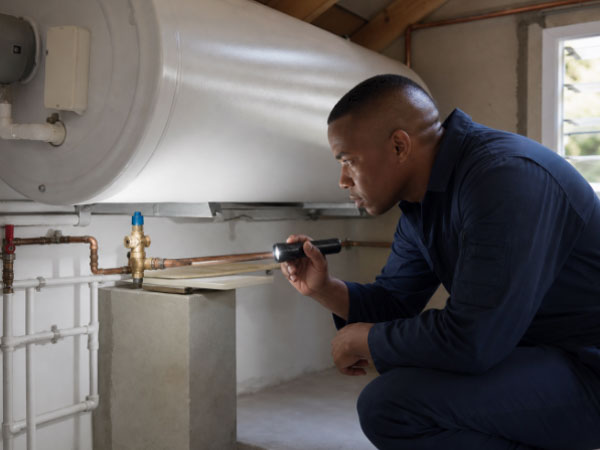
- Anything involving the geyser — installation, element or thermostat replacement, relocation. You're combining pressure and electricity, and the work needs a Certificate of Compliance from someone registered with the Plumbing Industry Registration Board. A badly handled geyser job is the classic "ceiling on the floor" story every plumber has three of.
- Burst or hidden pipe repairs inside walls or ceilings — you're dealing with real pressure behind a surface you can't see, so a small misjudgement becomes a big, hidden one.
- Moving or adding pipework — relocating a basin or toilet, or any renovation plumbing, needs to meet the SANS 10252/10254 standards and be signed off properly.
- Sewer or main-drain blockages beyond the trap — the wrong tools here tend to make things worse, and it can shade into a municipal-boundary issue that isn't yours to fix anyway.
- Water mains or pressure-reducing valve work — this is whole-house pressure, and getting it wrong doesn't stay contained to one room.
- New hot-water or backup-tank plumbing tie-ins — for something like a JoJo or backup tank feeding into your house plumbing, the work has to be done to standard or your insurance simply won't hold if something later goes wrong.
And because none of these jobs are cheap, it's worth lining up more than one quote rather than accepting the first number you're given: something like a Pretoria-based plumbing quote-comparison service makes that easy to do if you're in that area, rather than committing to whoever answers the phone first.
How to tell the difference next time
After enough soggy Saturdays, I've boiled it down to one question with two halves. Can I fully isolate this job, is the pressure low, and would the worst-case mess fit in a bucket? Then it's probably fine to DIY. Does it touch the geyser, the mains pressure, gas, concealed pipework, or require a compliance certificate? Then it's a plumber's job — full stop, no exceptions, no "I'll just have a quick look."
That basin-cupboard flood taught me the question is worth asking before you start, not while you're already kneeling in the water. Ask it honestly, and you'll know within about ten seconds which side of the line you're standing on.