
How to read a plumbing quote — the pricing red flags every South African homeowner should check before saying yes
The cheapest quote isn't automatically the best deal, and the most expensive one isn't automatically the safest bet but once you know what to look for, it only takes a few minutes to spot the ones worth questioning.
29/07/2026

Most people read a plumbing quote for exactly one thing: the number at the bottom. That's the wrong way round, because a quote is a document you're entitled to read line by line — and once you know what each part is meant to tell you, that number stops being a mystery and starts being something you can actually judge.
Quotes vary for real reasons: labour time, the parts involved, whether it's an after-hours callout, and how urgent the job is. That means the cheapest quote isn't automatically the best deal, and the most expensive one isn't automatically the safest bet. Once you know what to look for, it only takes a few minutes to spot the ones worth questioning.
Here's what to check before you say yes:
- Is it itemised, or just one big number? A fair quote separates out labour, materials or parts, and the callout fee, so you can see exactly what you're paying for. If all you've got is a single lump sum with nothing broken down, that's the first thing to ask about.
- How is the callout fee handled? Ask whether it's charged separately from the work itself, and whether it gets absorbed into the final bill if you go ahead with the job. Get the answer in writing, not just a verbal assurance on the day.
- Is the labour charged hourly, or as a flat rate? Both are legitimate, but they carry different risks for you. A flat rate on a well-defined job protects you from an open-ended bill if things take longer than expected; an hourly rate only makes sense once you understand roughly how long the job should take.
- What's specifically excluded? This is where hidden costs tend to hide — parts not included, rubble removal, after-hours premiums, or a vague line like "if we find X it'll be extra." A trustworthy quote states its exclusions plainly rather than leaving them to be discovered on the invoice.
- Are after-hours or emergency call-out premiums disclosed up front? These premiums are legitimate — plumbers are entitled to charge more for a Sunday-night burst geyser than a Tuesday-morning drip — but they should be on the quote before the work starts, not added as a surprise afterwards.
- Benchmark it against typical prices. Once you've checked the above, the last useful step is context: does this quote sit anywhere near what similar plumbing work generally costs in South Africa? a South African plumbing-price reference you can hold a quote up against is worth a look before you commit, simply to get a feel for whether the number in front of you is in the right ballpark.
- Is the plumber registered? A fair quote from a plumber registered with the Plumbing Industries Regulation Board — and ideally the Institute of Plumbing South Africa too — comes with something extra: recourse if the work goes wrong. It won't tell you whether today's quote is priced fairly, but it does tell you who's standing behind it.
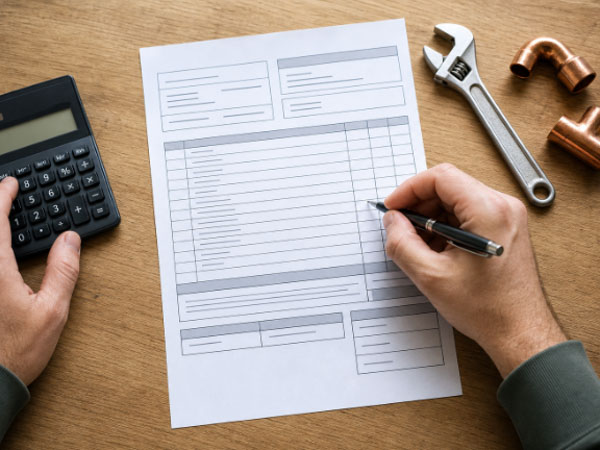
A quote you can read line by line, item by item, is a quote you can trust — or confidently walk away from. Get two or three, compare them against each other using the checklist above rather than just the bottom line, and the right choice usually becomes obvious fairly quickly.
Note: exact pricing and callout structures vary by region, by plumber, and by the specifics of the job — use the above as a way of reading any quote, not as a fixed price expectation.