
How to Choose a Bath That Actually Fits Your Bathroom Space
Finding a bath that you want but that does not fit can leave you cursing every time you climb in for a long soak.
16/01/2026
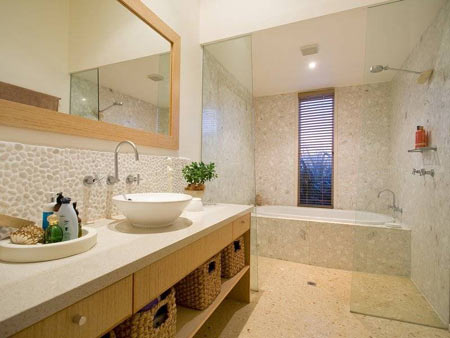
Looks easy until you're in a showroom with fifty of the things, trying to understand how it will work. Never mind just picking one that looks great. There is some measuring involved, but it has far more to do with functionality, access and use rather than fitting perspective. A bath that you want but that does not fit can leave you cursing every time you climb in for a long soak.
It relates to the fact that someone has fallen in love with a bath and doesn't know how it's going to fit anywhere.
The freestanding one you love will be less appealing when it allows you only six inches to walk by it.
Know Your Space
Before you look at a bath (bath) you need to ensure your room is measured properly. And that means:
- A measure of wall to wall in a few locations (walls are never straight in old houses!).
- A measure of any wall to the wall where the bath will be, noting how far any radiator, toilet or sink is too close to move.
- While it needs to fit in the room, it also needs to fit through the door. And up any stairs if necessary.
- Understand the height of your room so anything with shower fittings will fit.
- Standard ceiling height is generally fine, but not if you are in an old property.
Ceiling height alters what can go in.
Standard Measurements: Bath Sizes
Standard baths are 1700mm long and should never be less than 1600mm if used by anyone taller than an average adult. Widths are usually between 700mm and 750mm. Standard size does not work in smaller bathrooms, though so look at shorter baths which can be anywhere between 1400mm and 1500mm.
Baths are not as deep as you think at around 400mm. It's not that deep. Depth is important as deeper baths are around 500mm to 600mm which allow someone to lie down, rather than awkwardly hang around and relax (they will also take more water if you're on a water meter, so be mindful of this).
Useful Tip:
Check the measurements in mm and inches before applying them to other baths.
Shaped Baths
Classic shaped baths work and are necessary but can be avoided too. Corner baths work great in larger bathrooms, with a great focal point but take up more space than you expect.
P-shaped and L-shaped baths have space on one side for someone to sit down while taking up slightly less space than a rectangular corner bath. A bath with dimensions on one side can always be used properly when shaped but consider the following:
- Shower side is between 700mm-800mm wide for bathing space for elbows.
- Width dimensions are crucial as you don't want your arms bashing off walls for too small widths when showering.
- If only the absolute minimum space for a shower exists, consider looking at offset corner baths or compact p shaped baths where once again a bath will not fit at all.
Accessorize Your Bath
Check all dimensions surrounding the bath as these are just as critical:
- Building regulations say there should be 700mm-900mm in front of baths but 800mm-900mm is far more usable when final.
- Usable space – consider how much will be used especially if washing children, calming them down or cleaning them if stuck.
- Door space – is it easy to get out of the bath? Will you bump your head drying off?
- Taps placed at the end saves space but can be hard to reach when seated or lying in baths on the wrong end.
- Taps placed on the side waste a slight amount of width but make it far easier to access when lying or sitting in loos.
- Floor mounted taps - better for freestanding
- Older baths may not have space for plumbing access so
- Consider a little wasted width if there is nowhere to put anything after purchase.
Inefficient Budget
Just because its pricey doesn't mean it will fit, cheap baths can be incredibly good quality and perfect for your bathroom.
- Good enough quality works best for lesser budgets and it’s always a good idea to find vendors where the money can be allocated rather than the bath.
- When looking for baths and avoiding massive budgets, look at affordable bath specialists, you’ll get decent baths rather than spending too much where it’s “fancy” and other.
- Taps also take a fair amount of time and need decent plumbing to mount so please ensure costs of baths do not exceed installation costs (definitely cut costs everywhere vendors can).
- Cast Iron baths should never exceed strengths of those above them (in case of heavy weight). Floor levels below in older buildings need stabilization.
Lightweight acrylic baths come with benefits and drawbacks if already stable
- Heavy baths work better here
- Take a lot more effort to install
Check Out Baths Before You Buy
You should check depth and other aspects of baths wherever possible as while something may look great online or in a catalog, this does not mean it translates positively into practice
If you've managed to secure someone that lets you return a bath after purchase should any issues with it arise (and it can be tricky!)
Useful Features That Make a Bath Special:
Anti slip bottom, this makes such a difference; it's slight but stepping in and out makes this vital.
Reinforced spaces for grab rails, though you may not need these now, someone may without special accommodations needing to be made.
Double ended versus single ended baths, A double-ended bath has its waste pipe placed in the middle rather than at one end, only a good idea for single use at any given time.
Final Ideas:
Go for the largest bath that allows for everything else than to try to get away with something small just to beat taking up space. Generally, too big and too small can work against you!
Go for what will be used by people living there over looks. Attention should be directed toward right fittings in the right places versus trying to woo guests occasionally.