
How to Integrate Smart Home Technology with Professional Caregiving to Protect Vulnerable Seniors
Smart home technology, when implemented correctly, provides an environmental care layer that supplements caregiving in an optimal way by covering the deficits in the capabilities of the aging resident.
05/09/2026
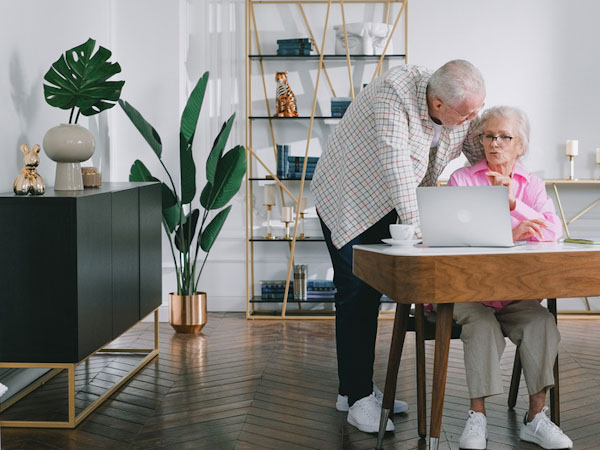
The majority of homes were not built with consideration for individuals who may have challenges, such as stepping out of a tub or remembering whether they took their morning medication. For families who want their aging parents to age in place, the reality is not necessarily that they will need to move to a safer location. Their existing residence could instead be modified into a place that can grow old with them.
The chasm between want and need in home for seniors
90% of individuals over the age of 65 want to stay in their homes for as long as possible (Glenn et al., AARP Home and Community Preferences Survey), and a large majority of those requiring assistance do not have the means but rather rely on unpaid family caregivers to provide them with in-home care. That often means an abundance of free, unskilled labor in homes unfit for elderly living and ill-equipped for the disabilities that aging brings.
The numbers of those requiring help and supervision are growing. Steps become harder to climb. Stoves are left on with increasing frequency. Faces and names become harder to recall. A house that was suitable for a healthy 60-year-old can turn into a place of potential hazards for a healthy 78-year-old. And the options that are typically suggested are either round-the-clock supervision in the form of constant family checks or paid caregivers that are prohibitively expensive both for the caregiver and the family, unsustainable in the long term, and extremely taxing on the caregiver emotionally, if not both. Supervision is the most cognitively and emotionally draining form of caregiving possible, and thankfully there may be an alternative in caregiving through the modification of the home environment.
Considering the home as an element of the care triad
Smart home technology, when implemented correctly, provides an environmental care layer that supplements caregiving in an optimal way by covering the deficits in the capabilities of the aging resident. Slower reaction time can be supported by lighting that automatically turns on. Absent-mindedness when cooking can be addressed by a sensor that turns off the stove. A fall that occurs at 3 am in the bathroom can be detected almost immediately.
This reframing is essential because families usually consider smart home tech as novelties that add convenience in entertainment, security, and other areas. However, when IoT is considered part of a caregiving triad, the focus moves from what can the technology help with to what cannot the resident do without assistance. What is the most pressing deficit to offset with available technology?
Where the smart home can improve the safety of seniors most
Falls are the leading cause of injury among seniors, with the conditions of darkness and the natural difficulties of locomotion being the most frequent causes. Fortunately, motion-activated lighting that is activated when the senior exits the bedroom and illuminates the path to the bathroom is a simple solution that does not tax the memory or mobility of the aging resident in any way.
The kitchen, by contrast, is a place where the conditions of natural aging can interact with the early stages of cognitive decline to create situations where the stove or oven can be left unattended, presenting a hazard of both burns and home fires. A sensor that can detect the absence of movement near the cooking appliance after a preset period of time can turn it off, thus eliminating two of the most frequent dangers for seniors.
Flood sensors, by contrast, are an inexpensive way to detect water damage and potential slips and falls due to water on the floor. Water accumulating from a broken pipe under the sink or a tub left running poses a danger to seniors, and the early detection afforded by a flood sensor is invaluable. Similarly, environmental sensors for smoke and carbon monoxide round out the list, although these will be less interesting to the children of seniors.
Providing caregiving eyes while respecting the privacy of the aging adult
The remote health monitoring enabled by wearables and smart home technology is a recent innovation that can be a tremendous reassurance to families that their loved ones are safe without invading their privacy in any way. Devices that can monitor blood pressure, glucose levels, heart rate, and sleep cycles can transmit this information to the appropriate parties in real-time. The gradual increases in blood pressure, for instance, will be more likely to prompt a call from family to the senior rather than a call to emergency services.
As can be imagined, there are many considerations on the part of the families that make them hesitant to implement such technology at home. In essence, the technology offers too much information, and an aging adult is unlikely to appreciate the feeling of being watched that constant knowledge can engender. It is why the majority of care providers suggest that motion- and door-activated sensors be installed in the public areas of the home, the front and back doors, the medicine cabinet, and other common areas. The privacy of the senior must be respected, and their preferences on who gets what information and how much should be taken into account. Perhaps their spouse needs more information while the daughter is only notified in emergencies. That may sound like too much nuance for some, but it is frequently the difference between adopting the technology or abandoning it in frustration with the constant requests for permission.
On the other hand, the voice-activated assistants are an interesting middle ground, as they provide excellent solutions to the dangers of isolation that seniors are likely to face while being fairly simple to implement. With the increased rates of cognitive decline, physical decline, and the increased prevalence of chronic diseases among seniors, social isolation can contribute to these challenges. Any solution, such as the easier ability to contact grandchildren without having to use a phone, that encourages social interaction is almost certainly worth pursuing.
Technology is not a replacement for humans; it is a tool that enables them
It is not suggested that the smart home can replace the care and companionship provided by humans. A sensor can notify you of a fall, but it cannot comfort the senior or determine that they are emotionally distraught and have been isolated for most of the week. That will always require an actual person to provide support and assistance in physical terms. The ideal caregiving scenario utilizes the smart home tech to take over the monitoring duties, allowing actual caregivers to focus on those tasks that only they can provide.
That is where the majority of families are going to have to start, with just a few strategic technologies in place to help them monitor the situation. It is not uncommon for the families of seniors to acquire a few devices, configure them, and then essentially abandon them because they do not want to deal with the complexity of an entire smart home ecosystem. In particular, a fall sensor in the living room will not be sufficient when the staircase is the more likely location for a fall. A home care provider can help families understand the senior's day-to-day support needs, while technology choices should be assessed separately based on the home and the devices themselves. For families using smart home tools, All American Home Care can provide in-home care alongside those tools so that technology complements rather than replaces human support.
Care coordination is more important than many people realize
A caregiver, a family member, or a home health nurse receiving different information from different applications is not an unusual sight, and something that could have been avoided with better coordination could very well cost a life. A uniform approach to caregiving, where everyone knows what the technology tracks and what it does not, is going to be essential in making sure the things that need to be monitored are actually monitored.
A phased approach to caregiving in the smart home
It can be daunting thinking about the changes that would have to be made to an entire residence to make it suitable for seniors, and so it may be best to think in terms of phases.
The initial stage consists of the most basic security and convenience needs, namely, smart locks, video doorbells, and voice-activated assistants. They are inexpensive, simple to install, and address two major concerns of aging in place: who gets in and out of the residence, and can the senior call for help or get in touch with family in another way without having to use a phone.
The second phase consists of the environmental needs of the senior, such as lighting that is activated by motion, water leak sensors, and medication reminders. These assist with the most common pitfalls of seniors living at home, namely the stove left on, along with addressing medication adherence.
Finally, the health monitoring devices form the third phase. Fitness trackers and other devices that can monitor the essential vitals play an important role in caregiving while being relatively unobtrusive. For seniors with cognitive decline or memory impairments, the additional layers of security afforded by GPS trackers and door sensors are invaluable. That kind of data, however, is the most interesting to professional caregivers and requires special consideration due to privacy concerns.
The right fit in a smart home for a senior goes beyond just a shopping list of technology
The needs of seniors vary greatly, and the requirements for each individual are frequently very different from one another. Someone with early-stage dementia will have drastically different needs from a person with diabetes and no cognitive decline. An individual with poor eyesight will be more suited for voice-activated solutions and auditory alerts rather than visual displays on a tablet or similar devices.
That is why professional assistance, especially when it comes to technology needs, is vital both at the beginning and later stages of aging in place. The requirements can change, sometimes gradually, and sometimes rather quickly after an illness or a hospitalization. A professional caregiver who can reassess the home every few months will be able to identify a developing hazard that the family may not have realized was there. This is also when HIPAA compliance, if applicable, becomes essential, as the necessary personal information will have to be shared with a licensed provider in order for them to be able to offer appropriate services. It should also be noted that such a professional may be able to suggest modifications to the existing technology setup, such as an upgrade to a more sophisticated medication dispenser.
A home that is conducive to elderly living and built around the needs of the aging adult will be much more personalized and involve a careful cooperation with the care providers that can make the modifications rather than purchase whatever is currently on sale. It is a long-term vision, but having the right smart home environment is going to be the closest thing to a home that grows old with the resident.