
Choosing garden statuary and landscape ornaments
You re not alone if you find that the piece of garden statuary that looked so elegant at the garden centre just doesn't seem to fit your garden back home. A common mistake gardeners make when buying a piece of garden statuary is one of size and quantity. Purchasers tend to choose pieces that are just too small for their space or they overload their garden with too many pieces.

In garden statuary, as with many other design elements, the guiding principle usually is that less is more. Here are some simple guidelines that will help you choose the perfect piece of statuary for your garden.
Keep It in Context
The most important consideration to keep in mind when choosing the right piece of statuary is the overall style of your home and garden.
Whether you have an urban, contemporary or country garden, the statuary you select should be compatible with the style and feeling of your house and garden. Most likely, you wouldn't place a classical statue in a contemporary-style garden. However, classical statuary makes wonderful features for a more traditional garden.
This is not to say that you can t mix it up a little bit. There is always the opportunity for personal expression. An Eclectic mix of styles can create original and exciting compositions, but this is most effectively accomplished by a gardener with a sense of his or her own personal style.
Think about your garden as a blank wall in your living room. Before choosing what to hang on your living room wall, you take cues from the style of the room. Think of your garden in that context, from the size of the space to the arrangement of trees, shrubs and flowers. These will be the cues to choose and place your garden statuary.
Keep It Simple
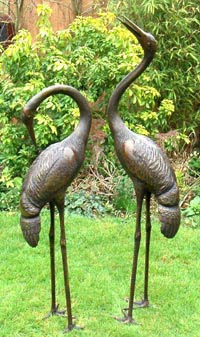
Gardeners trying to introduce too many pieces into their garden create too many distractions for the eye to absorb or enjoy. The garden becomes complicated and cluttered.
Under the less is more principle, one well-suited piece will create a presence and a focal point, introducing harmony rather than chaos into the garden. The less is more principle does not mean you are limited to symmetrical arrangements of statuary in your garden. Multiple pieces and styles can work comfortably together if they are not part of the same compositional frame.
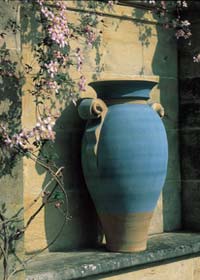
Each part of your garden may have a different mood or feeling and can provide an opportunity to incorporate different types of garden sculpture. Such pieces create interest year round and serve to animate and personalize a space; a strong design element can even inspire the theme for the plantings. For example, the right type of statuary can look equally well in bold foliage such as elephant ears or hosta. Whilst a shady naturalistic area may be the perfect spot for a small animal figure or bench.
Statuary need not be placed front and centre and often should not be. Nestled in among the plantings, they do not distract from the overall composition. However, discovering such pieces as one strolls in the garden brings a wonderful element of surprise and magic to the garden.

Create a Frame
Just like a picture on your wall, garden statuary looks best with some kind of frame. A background of clipped box, yew or a mixed border of grasses frames your statuary in the landscape. A stone wall or trellis covered with roses or even a simple wooden fence is all you need.
david harber - adams arts - phillip simmonds -