
Repairing furniture
While restoring is usually a job for professionals, it's possible to tackle wear and tear on everyday items yourself.
Leather: Tears and stitching
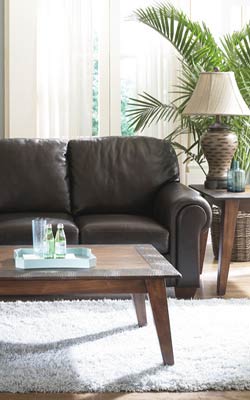
If the stitching that joins leather pieces on a chair or sofa has broken, use a saddle stitch to form a double row of threads through the existing holes. You will need strong needles available from craft and upholstery suppliers. Repair small tears with a patch of leather large enough to be coated with PVA adhesive all around the edge of the damage. Colour any of the exposed patch with a tinted leather polish, poke the patch through the tear and stick to the back of the surrounding leather.
Fading
You can re-colour a faded chair if it is particularly shabby but do seek expert advice before you start. A tinted shoe polish is the safest method for the amateur.
Stains
Stains can be very difficult to remove from leather upholstery. Try using a spray-on stain remover but always try it on an inconspicuous area first. Rub over the stain with a new cotton cloth, turning it frequently.
Maintenance
Keep leather in good condition by feeding the hide with saddle soap. Work in small circular movements to force the cream into the pores of the surface and leave overnight to sink in. Repeat for really dry areas and buff with a clean cotton cloth.
Fabric Upholstery: Sagging seat

If the seat is sagging, remove the covering fabric and padding. You will need pincers and a tack removing tool to loosen any tacks and staples. Put the padding and fabric to one side. Stretch the new webbing tightly (it should make a musical note when plucked) across the frame, interweaving the side-to-side and front-to-back pieces.
Fix the webbing with two or three tacks, fold over about 25mm at the end of each piece and add a further two tacks to form a W pattern of tacks. Cover the webbing with heavyweight hessian, tacked around the edge of the seat frame at 25mm spacings. You should be able to re-use the old padding and add a new covering fabric or replace the original.
Missing braid
Often the decorative braid that is fixed around the edge of an upholstered seat is missing. This can be replaced with new braid. Measure the amount of braid needed and cut to length. Start on the back rail of the seat and attach the braid with a hot glue gun. Pull the braid slightly taut as you work around the edge to give a neat edge.