
Open plan dining room inspiration
Not everyone has the knack for interior design. For those who find it difficult to design the perfect dining room, here are some images to inspire you and provide you with ideas when decorating a dining room ...
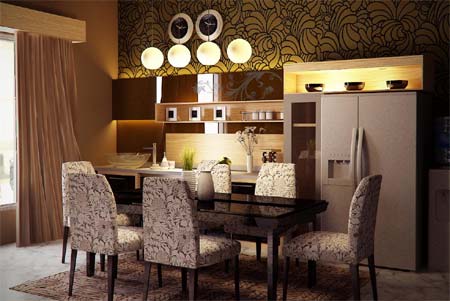
Pay special attention to lighting as this is an easy and affordable way to give an open space more definition. Choosing a variety of lights - recessed lights, pendants, track lights, accent lights - will instantly allow you to set off one area from another. In a long, narrow space that has windows at both ends, limit tall items as much as possible to allow light flow in the space between.
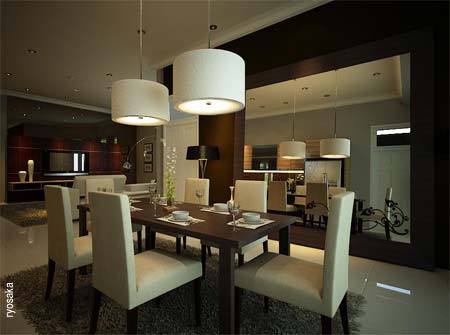
Dramatic lighting is used to demarcate the open place. The three large pendants over the dining table add interesting depth and contrast against the outdoor view beyond.
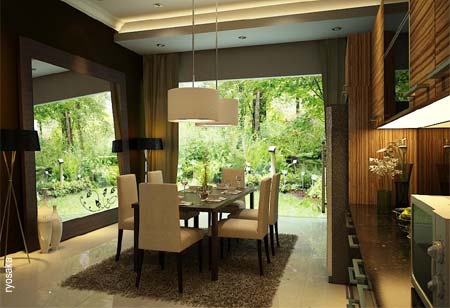
The main challenges when planning open plan designs for living and dining room areas, is whether to to design for one large, single room, or to section the separate areas. In a smaller open plan setting the ideal is to create a combination of both, with each separate area combining to form one unified - and larger - room.
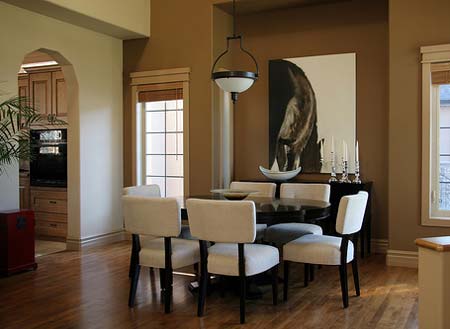
Choose curtains or blinds that you would like to see on all windows. If you do select a coloured window treatment, the colours used should be incorporated throughout the open plan space. In the dining space below, yellows and greens were taken from the open plan kitchen and incorporated into the dining space, to create a more unifying effect between the two spaces.
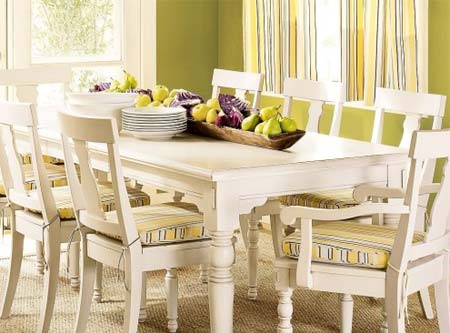
Positioning furniture in the centre of a room will encourage conversation and interaction and make a room feel whole, whereas furniture lined up against the wall will have the opposite effect.
Additional ways to define spaces is achieved by making use of room dividers such as open book shelves, hanging cloth panels, folding screens, and even sliding doors that can close off an area or disappear completely to leave a room wide open.
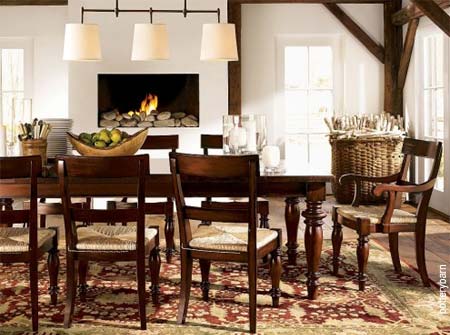
Whenever possible try to ensure your open plan settings have a focal point - in the image above a a fireplace is the obvious focal point - but you may want to draw attention to a window, dining table or attractive picture, as an alternative focal point. However, if you have defined a dining and living room in one open area, consider having two focal points: one for each area.
Although open plan living has it's drawbacks and does seem to lack the extra details and character that older homes have, there are ways of adding our own personal touch and creating cosy spaces. Dividing your space is an important part of living in a new home and the results can be stunning!