
To prime or not to prime
Primers are formulated to grab onto surfaces and chemically bond to the paint. When paint is applied correctly it will stay looking good for a very long time.
Certain primers also serve other functions; they seal a porous surface and they even out the texture of the object so the finish paints for a smooth surface. By using a primer before painting you will achieve longer lasting results, even if you are painting bare wood, metal, plastic or just about any surface - even ceramic tile!
Primer for interior masonry and walls
Walls, cement, plaster and brickwork require a primer. Primer prevents quick absorption of the paint into the surface. Specialist primers are used for damp, waterproofing, and stain blocking. It is recommended that a plaster primer be used for new interior walls or as a binding agent for porous surfaces to stop paint from peeling or flaking in the future.
Primer for wood
A wood primer seals the surface of wood so the paint is not easily absorbed into the wood, which allows you to have even gloss over the entire surface. There are several reasons why using a primer before painting wood is necessary. First of all, wood is very porous and will absorb the paint, drying the paint prematurely.
As most paints undergo chemical reactions during the process of curing, they depend on water or solvent being evaporated slowly rather than being absorbed quickly by the underlying material. A layer of primer will help the paint to undergo proper complete curing cycle. Secondly, without a primer, several layers of paint can be necessary to completely obscure the wood grain and ensure even colour .
Primer for metal
Most metals require a primer, especially when exposed to the elements in exterior situations. Metal primer serves to protect against oxidation and rust.
Primer for plastic
A primer will reduce the number of layers of paint necessary to completely cover the previous colour, and will allow the paint to make a thorough bond with the surface being painted. There are now special-formulated primers for plastic, such as that offered by Rust-Oleum.
Primer for ceramic tile
After scrubbing and lightly sanding with 180-grit sandpaper, a ceramic tile primer is essential if you want paint to stick to your tiles. You need a strong bond between paint and tile, and a quality ceramic tile primer provides this. However, even with a primer, painting of floor tiles is not recommended.
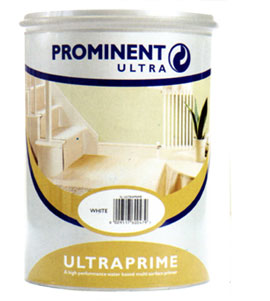
All-in-one primer
Prominent Ultraprime is a high performance, superior quality water-based primer formulated for interior and exterior use on metal, wood, walls, SupaWood, plaster, ceramic tiles, rigid PVC and ceilings. It provides an extremely smooth base coat for subsequent painting. It also contains fungicide to eliminate fungal growth.