
How to colour block for walls
Looking for a way to spruce up your walls? If wallpaper isn't your thing but you're dying for a splash of colour and pattern, then colour blocking may be just the technique you're looking for.
A trend that has periodically to come back into fashion since the ‘70s, colour blocking is done by selecting zones on a wall or ceiling and painting them a different colour from the main wall colour. This technique is an easy way to highlight a feature or simply dress up an empty wall.
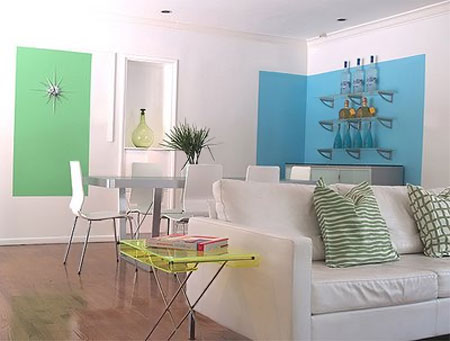
Imagination is the only limit when it comes to colour blocking. Shapes vary from stripes, rectangles, squares, circles or a mix of several. If you're using more than one tone, you can place shapes side by side or even have them overlapping. If you're not confident choosing colours or shapes that will work in your room, envisage what atmosphere you want your space to reflect.
With colour blocking, you can use it to create a sophisticated look or a fun look. It's always a question of taste; what is beautiful to one person may not be appealing to another. Using circles and curved lines tend to invoke a light and fun feeling, whereas rectangles and sharp edges can create a more serious space.
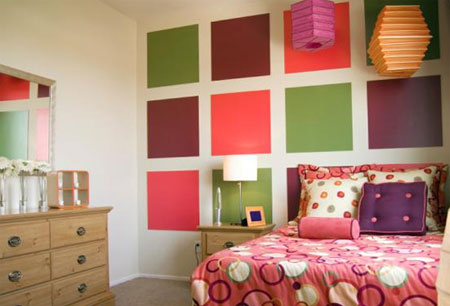
When it comes to colour blocking, the possibilities are endless and you can find inspiration in almost anything you like. For example, a colour palette in a favourite piece of artwork could inspire you to use similar colour combinations on your walls.
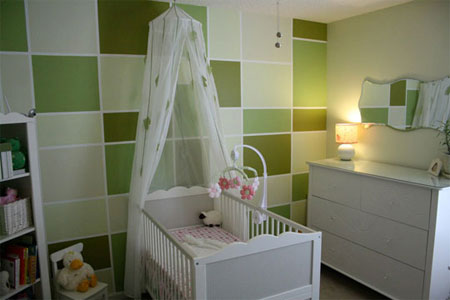
ohdeedoh.com
How to get the look
• Inexpensively create the illusion of a headboard in your bedroom with creative painting techniques. You can use a solid tone on the wall behind your bed or be creative with shapes.
• Highlight wall decor. You can use colour blocking as a backdrop to frame decorative elements like wall mirrors or artwork.
• Block off an area in an open space. You can create defined living spaces by using colour blocking to separate a dining area from a living area.
• Update furniture. Who says colour blocking needs to be reserved for walls? You can take an old armoire and spruce it up by painting the sides a different shade than the front.
Handy tips to colour block your own walls:
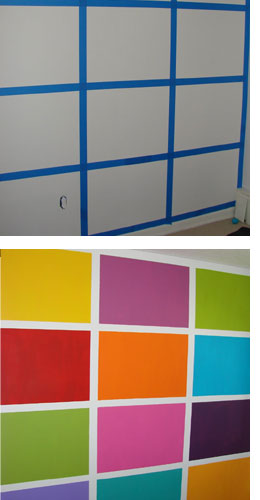
• Plan the shape on the wall according to the size of the space. Be sure to take into consideration the placement of furniture in the room when designing your colour block.
• Measure your shape or pattern on the wall, drawing very lightly with a pencil
• Apply masking tape to the lines if they're straight. If using curved lines, it's best to use a stencil.
• Paint within the lines of your shape, being careful not to use too much paint; you don't want it to seep outside the lines.
• Carefully remove the masking tape or stencil immediately after painting.
lauren mcphillips - images: sico