
Don't just hang there!
Dressing windows to match your new home can be an intimidating task. If you're looking for inspiring ways to dress up windows ... look no further! Be inspired to hang drapes in a whole new way.
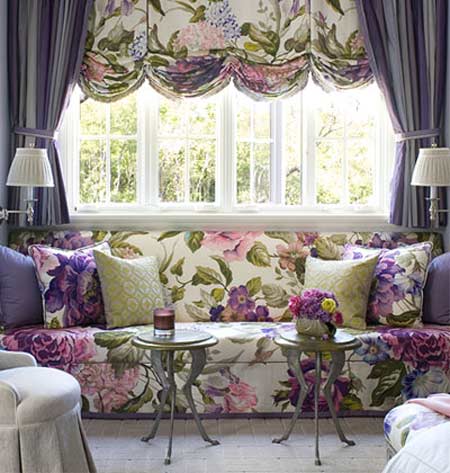
In a room without much pattern on the walls and furnishings, the windows make available an ideal opportunity to provide the space with the visual movement and rhythm that a pattern can give. Remember, too, that window treatments can include more than one pattern, with complementary prints used as the main fabric, lining, and trim. Conversely, tread lightly with pattern at the window when an abundance of prints has been included elsewhere in the decor. A cacophony of mixed prints creates a visual discord that's hard to live with.
Colour, pattern, and texture are design tools that play an important role in window dressings. If the room features a bright, bold colour on the walls, a more subtle palette may be preferred for the window treatment.
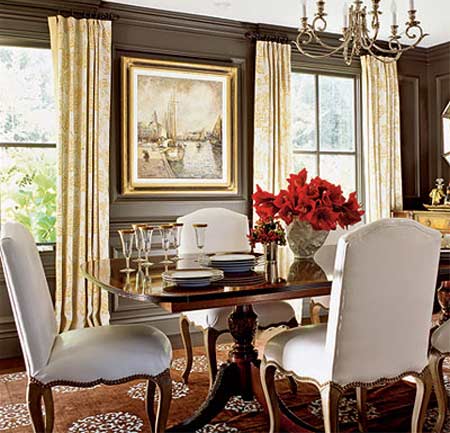
What window treatment?
Window treatments are more than a decorating decision; they are also a very practical one. Curtains, shades, blinds, shutters - or any combination of these window dressings - must also serve a functional end: to admit or block sunlight and to provide privacy, as well as ultimately look good.
Before dressing windows in a home take the time to decide on the style of the room in question. Are you going for a contemporary look, something more traditional, or a relaxed country atmosphere. This will provide parameters for finding the appropriate window dressing.
Damask draperies ornamented with velvet braid, silk fringe, and decorative rosettes obviously are not a consideration for a streamlined, contemporary style. For a traditional room, vertical blinds may be too contemporary a solution, unless a touch of contemporary's clean, unfussy style is desired. In a country room, treatments that carry forth the style - tab curtains, simple panels made from retro fabrics, or nostalgic lace panels - can be effective.
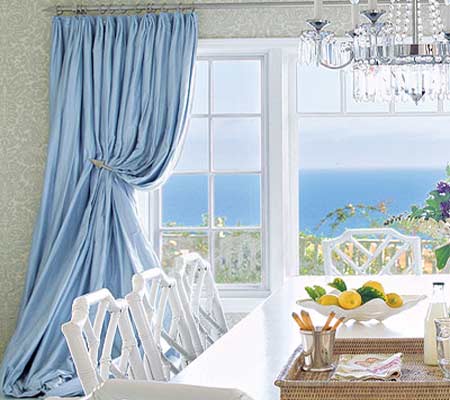
Make sure window treatments inject the appropriate texture to balance a room. Too often, texture is overlooked as a consideration, even though it can entirely alter the ambience of a room. For a hard, predominantly wood-filled space with few upholstered pieces, select soft, voluptuous curtain fabrics.
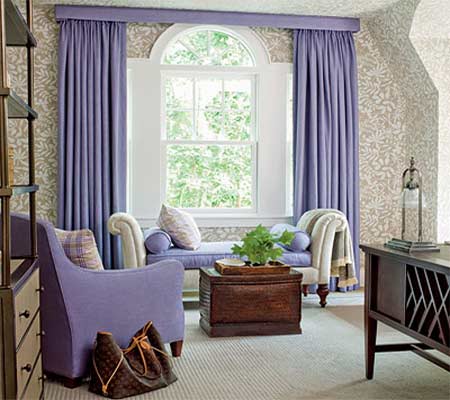
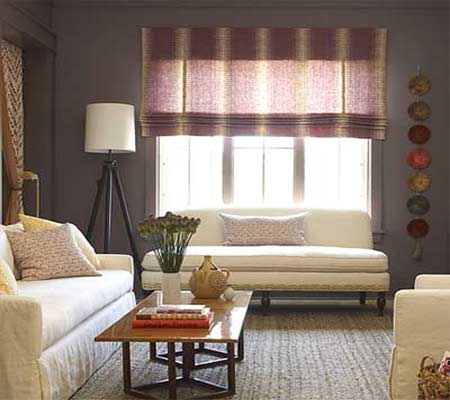
Just as window treatments in general encompass a plethora of materials and styles, blinds and shades can come in a range of diverse looks. Compatible with virtually any decorating and architectural style, blinds and shades can be clean-lined and simple or highly decorative and intricately shaped. They can be translucent or opaque, patterned or solid.
For contemporary spaces, blinds and shades are often a satisfactory window dressing on their own, with no need for additional window treatments. But in a dressier decor, especially one with rich, traditional flavour, blinds can look out of place unless given a finishing touch of drapery.
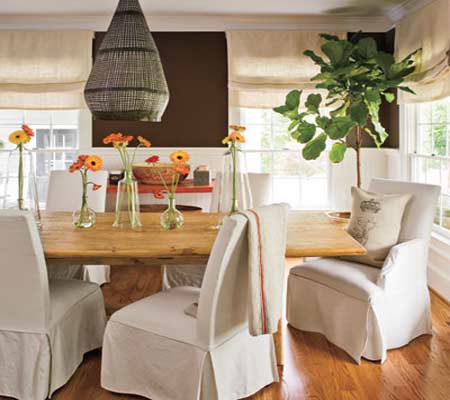
When both practical and decorative issues are addressed, window treatments become one of the most effective design statements in the home, expressing the personality of the owners while working to meet their lifestyle needs.
via coastal living